
Moving to Reconnect
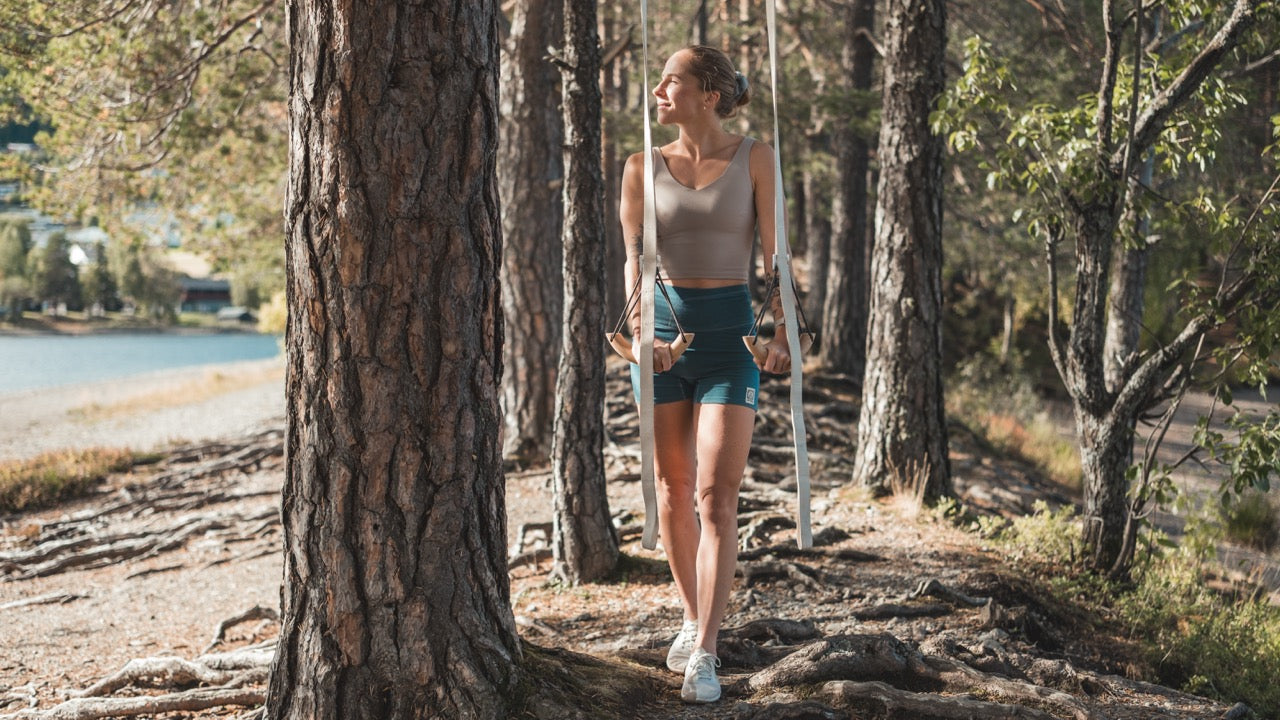

Humans evolved in nature, not on perfectly flat gym floors. While modern exercise is incredibly valuable, research increasingly suggests that moving outdoors and spending time in nature can improve enjoyment, motivation, and mental wellbeing. Reconnecting with natural movement isn't about rejecting modern training—it's about complementing it with the environments our bodies have adapted to over thousands of years.
Movement as Part of Life
For most of human history, movement was not something we scheduled into a calendar or completed in a designated space. It was simply part of life.
We walked to find food and water, carried what we needed, climbed over rocks and trees, squatted to rest, crawled, reached, lifted, balanced on uneven ground, and adapted our bodies to constantly changing environments. We moved through forests, across fields, along coastlines, and over mountains. Movement was practical, playful, social, and necessary. It connected us to nature, to one another, and to ourselves.
Bodies Built for Variety
Our bodies developed through this constant variety. We were not designed to move in only one direction, at one speed, on one predictable surface. We evolved to respond to uneven terrain, changing weather, different loads, unexpected obstacles, and the physical demands of everyday life.
We pushed, pulled, carried, climbed, hung, twisted, rotated, balanced, and rested. Movement was not separated from living; it was woven into the fabric of daily experience.

The Disconnection of Modern Life
Today, movement has become something we often isolate from the rest of our lives. We drive instead of walk, sit instead of squat, take elevators instead of stairs, and spend long hours indoors under artificial light.
When we do exercise, it is often confined to a gym, a machine, a class, or a carefully measured training plan. These spaces and tools can be valuable, but they can also narrow our understanding of what movement is.
Modern life has brought incredible conveniences, opportunities, and advances. We do not need to romanticize the past or reject the benefits of technology. But it is worth recognizing that many of us have become increasingly disconnected from the natural inputs our bodies evolved with: varied surfaces, fresh air, sunlight, changing temperatures, physical challenges, and spontaneous movement.
Bringing Nature Back In
Moving to reconnect is not about rejecting modern life. It is about intentionally bringing some of those natural elements back into it.
It might mean walking barefoot across grass or sand, feeling the ground change beneath your feet, or allowing your balance to adjust to an uneven trail. It might mean climbing a tree, hanging from a branch, carrying a heavy object, crawling across the floor, or practicing movement without a fixed destination.
It might mean stepping outside before reaching for your phone, taking a walk without tracking your pace, or moving simply because your body feels ready to explore.

A Curious Approach to Movement
Natural movement is not a single exercise method. It is an invitation to become more curious about the many ways the body can move. It encourages us to notice our surroundings, respond to the environment, and develop physical confidence through experience rather than perfection.
A fallen log becomes a balance beam. A hill becomes an opportunity to climb. A rock becomes something to step over, sit on, or lift. A tree branch becomes a place to hang. The landscape stops being a backdrop and becomes part of the practice.
Moving for Connection, Not Correction
This kind of movement can also change our relationship with exercise. Instead of viewing movement only as a way to burn calories, improve performance, or correct something we believe is wrong with our bodies, we can begin to experience it as a source of connection and enjoyment.
We can move to feel more capable, more present, more grounded, and more alive.
Research increasingly supports what many people intuitively feel: spending time in nature while being physically active is associated with improvements in mental wellbeing, reduced stress, and greater enjoyment of movement. Nature-based interventions have also been linked to reductions in symptoms of anxiety and depression, while encouraging people to become more active in everyday life.

The Sensory Experience of Moving Outdoors
There is something powerful about moving outside. Natural environments offer sensory variety that indoor spaces often cannot replicate: the feeling of wind on the skin, the sound of leaves moving, the changing light, the smell of soil, the texture of bark, and the unpredictability of the ground beneath us.
These experiences can draw us out of our heads and back into our bodies.
They also invite a different kind of attention. On a trail, we may need to look where we place our feet, adjust our stride, navigate around obstacles, and respond to the terrain. We become more aware of our breathing, our balance, our strength, and our surroundings.
Movement becomes less about repeating a perfect pattern and more about listening, adapting, and responding.
There Is No Perfect Way to Move
The goal is not to become “perfectly natural.” There is no single correct way to move, and there is no need to turn every outdoor experience into a workout.
Natural movement is not about performing a particular identity or proving that we are more connected to nature than anyone else. It is about creating opportunities to rediscover movement as something instinctive, varied, and deeply human.
It is about replacing convenience with curiosity every now and then.
Choosing the trail over the treadmill. Taking the stairs simply to feel your legs working. Carrying your own bag. Sitting on the ground instead of always using a chair. Reaching, stretching, crawling, climbing, balancing, and playing.
Watching the sunrise instead of another screen. Allowing movement to be social, expressive, exploratory, and joyful.

Meaningful Movement Does Not Have to Be Intense
It is also about remembering that movement does not have to be intense to be meaningful. A slow walk through the woods can be just as valuable as a demanding training session.
Gentle mobility, playful exploration, and time spent outdoors can support our wellbeing in ways that are not always captured by numbers, scores, or performance metrics.
When we move in natural environments, we are not only training muscles and cardiovascular systems. We are developing awareness, coordination, resilience, confidence, and trust in our bodies. We are learning how to navigate uncertainty and respond to the world around us. We are practicing the ability to adapt.
Learning to Adapt
That adaptability may be one of the most important qualities movement can give us. The natural world is never completely predictable. The ground changes. The weather shifts. The body feels different from one day to the next.
Moving outdoors teaches us that we do not need perfect conditions in order to participate. We can adjust, slow down, change direction, try again, or simply pause.
Making Movement More Inclusive
This perspective can make movement more inclusive, too. When we move away from rigid ideas of what exercise should look like, there is more room for different bodies, abilities, ages, experiences, and goals.
Movement becomes less about comparison and more about participation. It becomes something we can explore together rather than something we must master alone.

Reconnection Through Community
Reconnection also happens through community. Humans have always moved together: walking, carrying, dancing, playing, working, travelling, and celebrating.
Shared movement creates opportunities for conversation, encouragement, laughter, and belonging. It reminds us that physical activity does not have to be isolating or competitive. It can be a way of building relationships and creating memories.
Finding Movement in Everyday Life
The more we reconnect with natural movement, the more we may begin to notice how much movement is already available to us. We do not always need a membership, a machine, or an hour-long training session.
We can begin with small choices: walking a little farther, taking a different route, sitting closer to the ground, exploring a local park, carrying something instead of rolling it, or playing outside without needing a specific outcome.
These small moments can gradually change the way we see our bodies and our environments. A body is not simply a project to improve. It is a living, sensing, adapting part of us.
Nature is not merely scenery. It is a place to interact, learn, challenge ourselves, rest, and reconnect.

Rediscovering What We Already Have
Because sometimes the healthiest thing we can do is not add more.
Sometimes it is to rediscover what we have always had.
To step outside. To feel the ground. To follow curiosity. To move without needing to justify every action. To remember that strength can be playful, that fitness can be joyful, and that wellbeing can begin with something as simple as walking, climbing, carrying, balancing, or breathing in the open air.


Celebrating Movement Together
We’re so proud of our community and the athletes we are working with who actively communicate this message through the way they train, live, and show up in the world.
Their commitment reminds us that natural movement is not just an idea. It is something that can be practiced, shared, and embodied.
And we’re proud that we had to create a festival, The Movement Made Festival, to celebrate it: a space where we can come together, explore natural movement further, learn from one another, challenge ourselves, play, connect with nature, and celebrate the many ways the human body is capable of moving.
Because this is not a message we want to keep to ourselves. It is something we want to explore together.

References
Calogiuri, G., & Chroni, S. (2014). The impact of the natural environment on the promotion of active living: An integrative systematic review. BMC Public Health, 14, 873. https://doi.org/10.1186/1471-2458-14-873
Lahart, I., Darcy, P., Gidlow, C., & Calogiuri, G. (2019). The effects of green exercise on physical and mental wellbeing: A systematic review. International Journal of Environmental Research and Public Health, 16(8), 1352. https://doi.org/10.3390/ijerph16081352
Pretty, J., Peacock, J., Hine, R., Sellens, M., South, N., & Griffin, M. (2007). Green exercise in the UK countryside: Effects on health and psychological well-being, and implications for policy and planning. Journal of Environmental Planning and Management, 50(2), 211–231. https://doi.org/10.1080/09640560601156466
Shanahan, D. F., Franco, L., Lin, B. B., Gaston, K. J., & Fuller, R. A. (2016). The benefits of natural environments for physical activity. Sports Medicine, 46(7), 989–995. https://doi.org/10.1007/s40279-016-0502-4
Rogerson, M., Wood, C., Pretty, J., Schoenmakers, P., & Barton, J. (2020). Regular doses of nature: The efficacy of green exercise interventions for mental wellbeing. International Journal of Environmental Research and Public Health, 17(5), 1526. https://doi.org/10.3390/ijerph17051526
Lieberman, D. E. (2013). The Story of the Human Body: Evolution, Health, and Disease. Pantheon Books.
Lieberman, D. E. (2021). Exercised: Why Something We Never Evolved to Do Is Healthy and Rewarding. Pantheon Books.
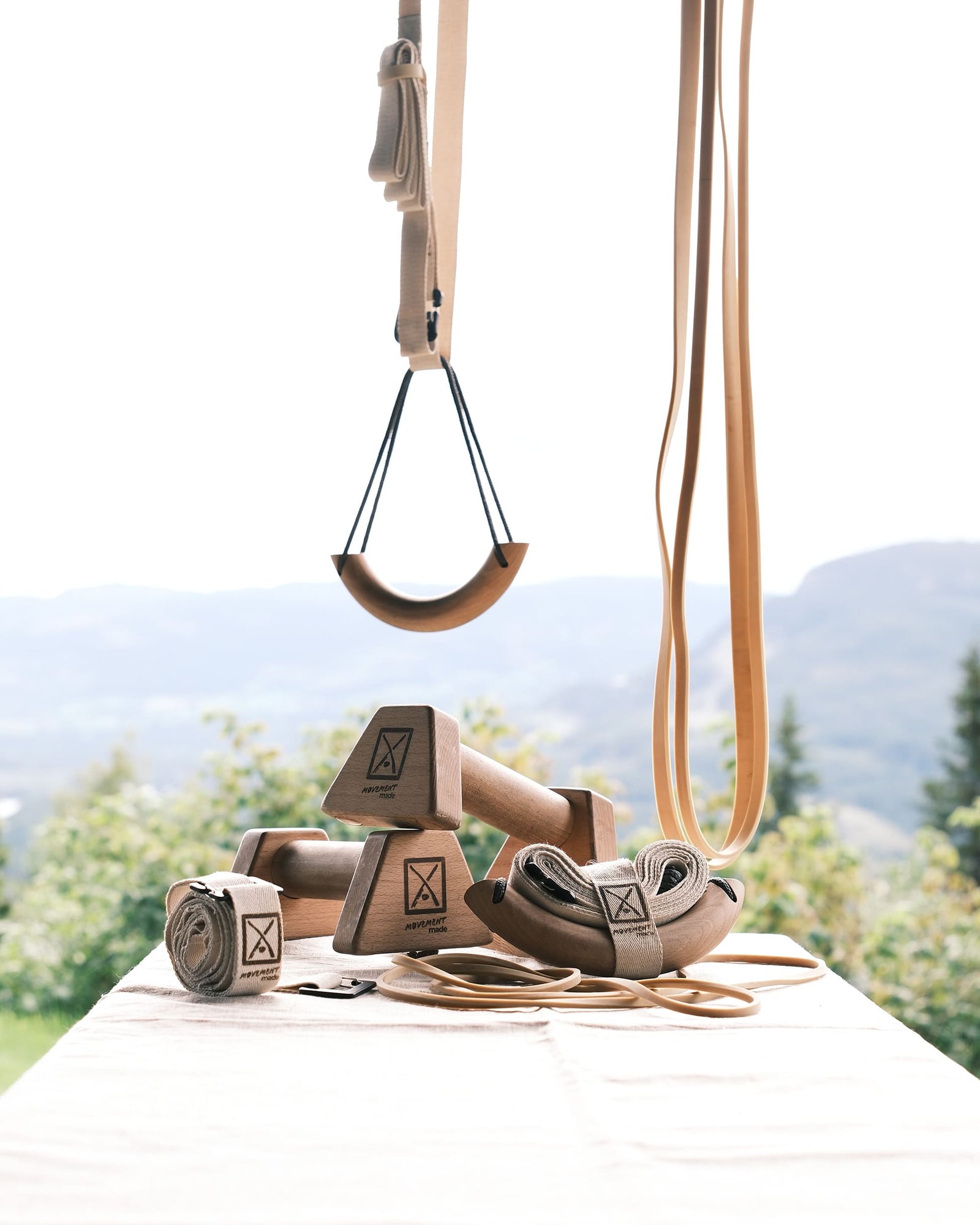
Explore Natural Products for your Movement Journey


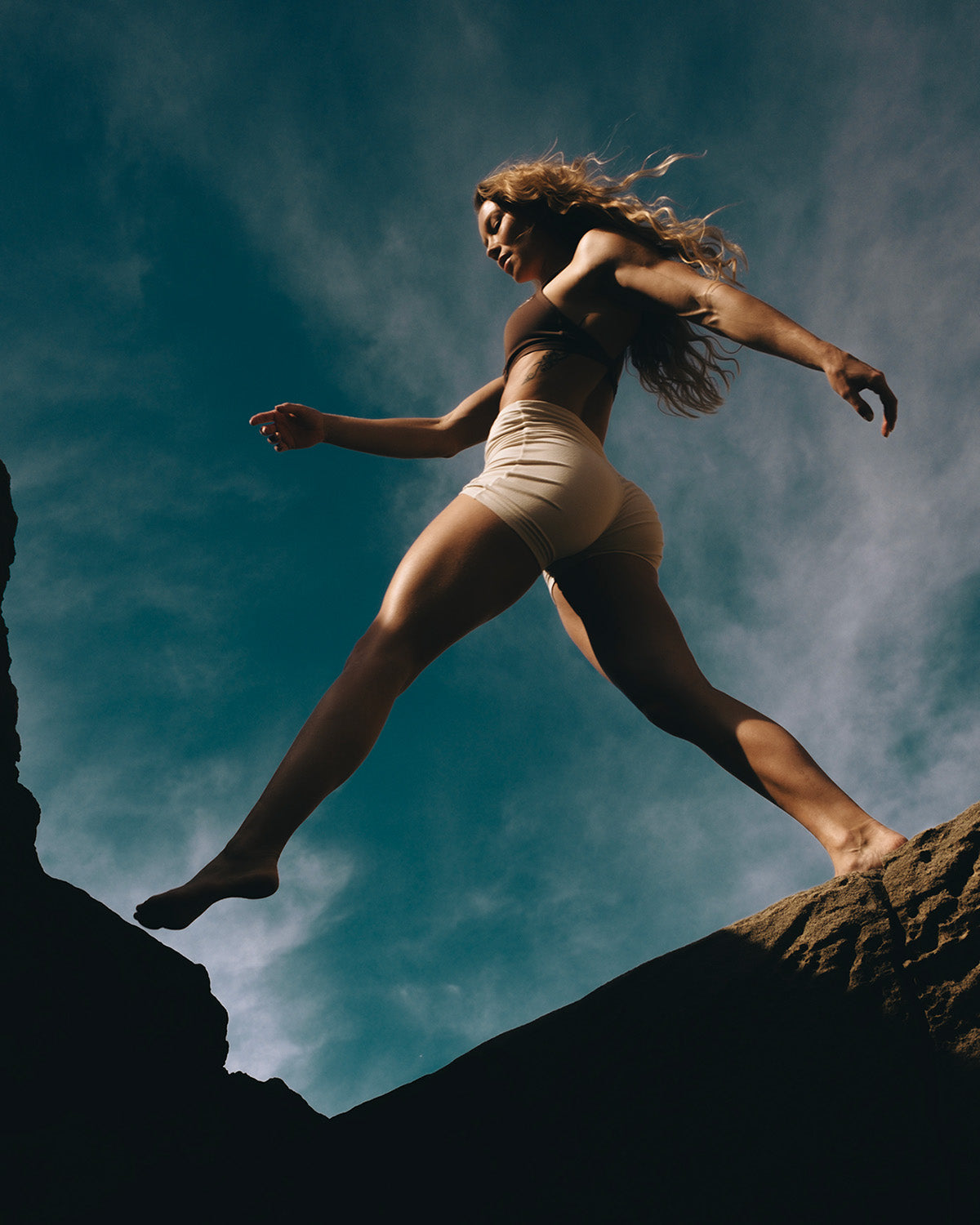


Moving to Reconnect
Movement was never meant to be separate from life. Moving to Reconnect is about rediscovering movement as something natural, varied, playful, and deeply human. And in the end finding our way back to our bodies, nature, and each other.

How to Strengthen Your Feet: Four Easy Exercises You Can Do at Home
There must be a reason why all our coaches wear barefoot shoes... One sign of weakness is consistently tired, achey, or tight foot muscles. Strengthening your feet will almost certainly help – far more than extra padding, which may feel soft but can weaken your feet over time by limiting mobility.
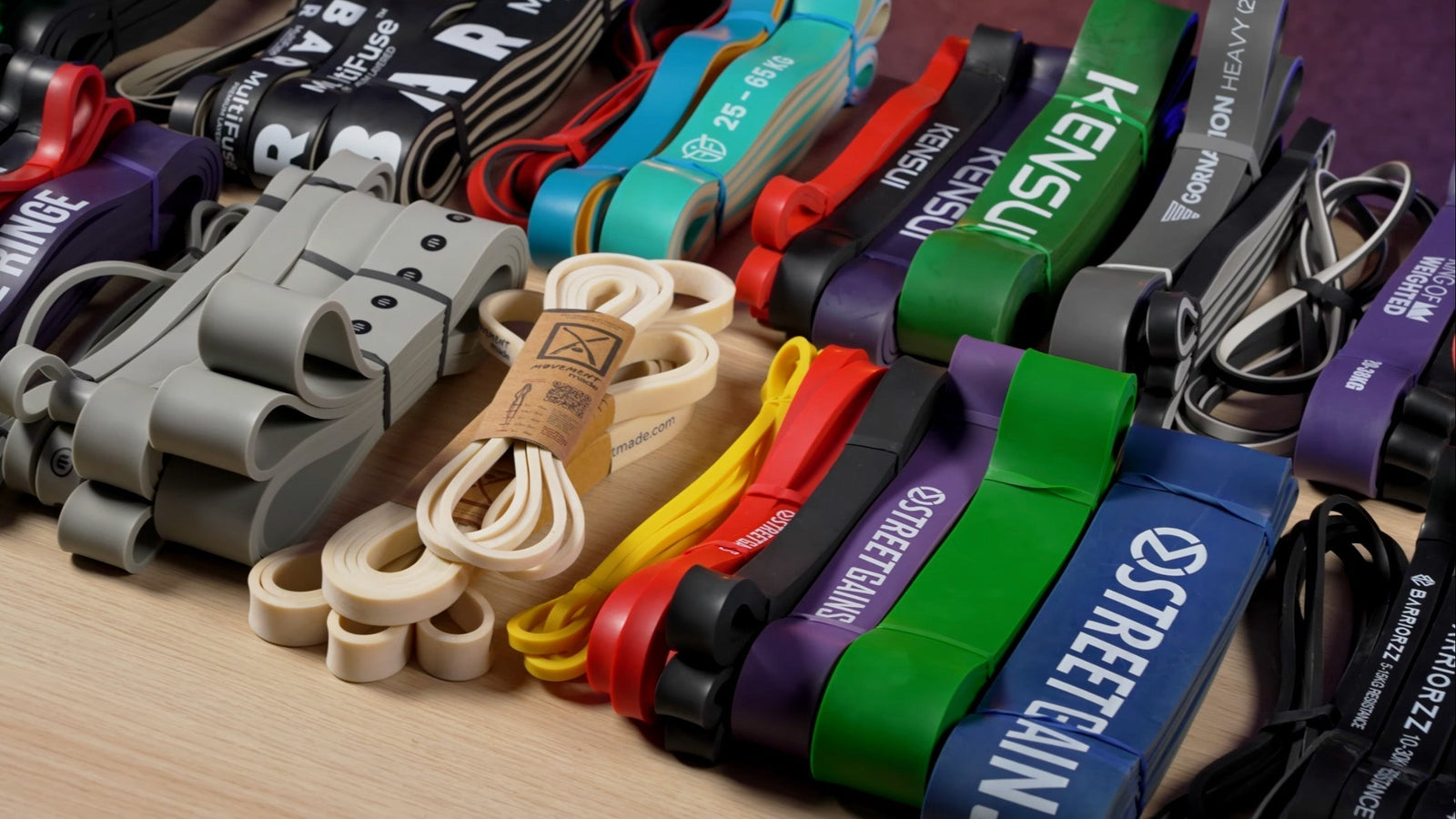

Movement Made Resistance Bands Featured in Calisthenics Worldwide Review
Our bands were recently featured in a review by Calisthenics Worldwide, and placed on top of the winning list - highlighted as one of the top performing options tested.