
How to Strengthen Your Feet: Four Easy Exercises You Can Do at Home


Going barefoot has become a natural part of how we move. Since all of our coaches wear barefoot shoes, it only felt right to explore the practice even further.
That's why we invited Vivobarefoot to join us at the Movement Made Festival in the Norwegian mountains, and it turned into an incredible collaboration. Together, we created inspiring content, exchanged ideas, and explored our shared belief: move the way nature intended – in a minimalist, sustainable way.
We learned so much from one another, and in this article, we're bringing those insights together to help you build your own barefoot movement knowledge – from practical tips to inspiring perspectives.
Why strong feet matter
Foot fitness is often overlooked, but it affects more than you think.
Your feet are the foundation of your kinetic chain. Every step you take – let alone every stride, jump, or dance move – sends a ripple effect through your legs, hips, spine, and head. Strong and stable feet help unlock healthy, dynamic movement.
Stronger feet are slower to fatigue, less likely to feel pain, and more resilient to injury. They also give you more control, which helps improve your balance and coordination. Strong feet are more empowering – and more fun! Running, hiking, performing, or exploring with achy feet can really suck.
This article guides you through how to assess foot strength, how to strengthen feet, and how to maintain your gains.

How to assess your foot strength
So, how do you test your foot strength?
One sign of weakness is consistently tired, achey, or tight foot muscles. Strengthening your feet will almost certainly help – far more than extra padding, which may feel soft but can weaken your feet over time by limiting mobility.
Pain in your heels, arches, or balls of your feet suggest a need to strengthen your intrinsic and/or extrinsic foot and lower-leg muscles. Your ‘intrinsic’ foot muscles, located inside your foot, help support your arch, avoid Achilles overload, improve balance, increase toe control, and reduce fatigue. Your extrinsic muscles – including the gastrocnemius and soleus in your calf and the tibialis anterior by your shin – connect your foot to your lower leg, absorb shock, stabilise your feet, and propel forward motion.
Three specific tests are useful for assessing foot strength:
- Barefoot walking on a hard surface. Practice walking for 30 seconds on the inside and outside of each foot and on your heel and tiptoes – all forwards and backwards. Try to walk slowly, tuning into how each part of your foot moves and feels. Pain or fatigue after these exercises suggests that strengthening exercises will help.
- Single-leg. Now test your balance and intrinsic-foot-muscle strength by standing on one foot … with a catch. The benchmark aim is one minute – with your eyes closed. The ultimate aim is one minute standing only on one forefoot, with your eyes closed. Master one forefoot, eyes open first!
- Calf raises. Also try some single-leg heel/calf raises, aiming for a ‘one second up, one second down’ cadence. 20 reps on each leg is a good benchmark for reducing injury risk. 30 is the gold standard for foot and calf strength.
If you’re able to visit our London or New York VivoHubs you can even assess your balance and foot strength with Plantar Pressure Plates. These are super insightful, but performing the exercises above barefoot will still allow you to tune into your natural proprioceptive system.
Four foot-strengthening exercises
Building foot strength is always a good way to increase resilience and functionality, even if you aced all the tests above. But it’s particularly important if these tests revealed room for improvement.
If your feet are in pain, it’s vital to start slowly with gentle movements and never push through pain. Motion is lotion, but progress should always be based on listening to your body and recovering fully.
We recommend four sets of exercises as a basis for a foot workout.

Sondre Berg is at his second decade wearing Vivo's! -There's no going back!
Toega
Yep, you guessed it: foot yoga. Toega is excellent for activating and strengthening your foot muscles while improving mobility. Try this four-exercise progression:
-
Foot mobilisation. Stabilise your ankle with one hand while gently moving your midfoot and toes with your other hand.
-
Hand-foot shake. Place your fingers between your toes and “shake hands” with your feet to connect with your toe and intrinsic foot muscles.
-
Squish and splay. Without using your hand, splay your toes apart and then squish them together – a super simple but effective exercise for feet. Start with 3 sets of 5 reps.
- Toe raises. This is one of our favourite coordination and strengthening exercises for toes. Lift your big toe up while keeping your other toes down, and vice versa. Again, start with 3 sets of 5 reps.
Barefoot mobility walks and balancing exercises
Vivos are flexible, letting your muscles and tendons load and recoil through full range of motion. This makes walking barefoot one of the best ways to promote natural foot strength. Research shows that wearing barefoot shoes daily for just six months increases foot strength by 57%.*
-
Barefoot walking. Walk barefoot daily, starting on soft surfaces like grass. Build up slowly to longer distances wearing barefootwear. This will help strengthen your arches, intrinsic foot muscles, and calves.
- Walking variations. Revisit the walking variations above: walk forwards and backwards on the inside of your foot, outside of your foot, heels, and tiptoes. Start with 30 seconds, walking as slowly as possible.
From pulsing to plyometrics
Pulsing and hopping help build elasticity and resilience through your lower-leg spring system: your foot arch, Achilles tendon, and calf muscle. Try this progression:
-
Heel pulses. Keeping the balls of your feet in contact with the floor, pulse your heels up just off the floor and down again at a cadence of around 180 pulses per minute. Start with one minute and progress based on recovery. Ten minutes or more is a great target.
- Hops. Practice light, rhythmic hops at around 180 steps per minute. Land softly through your forefoot, with your big toe and heel “kissing” down a split second later. Start with a few seconds and build gradually over weeks or months to 5 × 1 minute sets, resting for 30 seconds between each.
Functional mobility exercises
Because your feet are so integral to your kinetic chain, strengthening your feet will have a bigger benefit for your overall movement if you also build strength and mobility through your legs and hips. We highly recommend these exercises:
-
Kneeling to standing. Start in a comfortable kneeling position. Try alternating between your toes pointing forward and backward in the kneeling position. Then practice transitioning up into a standing position and back down into kneeling, keeping both feet on the ground. That’s one rep. Move slowly. Start with three sets of six reps, but focus more on control than quantity.
-
Deep squat. Deep squatting – with your heels down, pelvis neutral, and spine well aligned without bending or twisting – helps improve strength and mobility in your feet, ankles, knees, hips, and spine. Start with 30 seconds, and aim for five minutes daily or more. Don’t worry if it’s difficult at first. Gently hold a door handle for balance or use a book to raise your heels as needed.
-
Single-leg lunges and squats. Both of these exercises help build strength and mobility in your feet and legs. Build up to 3 sets of 8 lunge reps and then 3 sets of 5 squat reps, adding weight if necessary.
Single-leg calf raises. Aim for 3 sets of 20 reps on each leg, following a ‘one second up, one second down’ rhythm.


Festival coach Marie Risvik is chilling upside down in a split. -Vivo's are freedom.
Foot exercises for pain relief
All of these exercises for feet can help relieve foot pain. However, it’s crucial to start really slowly, progress gradually, and never push through pain.
Before starting strength exercises for foot pain you may find massage helpful. Focus on three key spots on your sole: just in front of your heel, just behind the ball of your big toe, and halfway down the outside of your foot. Start with small motions using your thumbs, then progress gradually to standing on a tennis or massage ball. Flex your toes up and down as you massage.
It’s best to see a health professional if it’s too painful to walk barefoot or the pain continues for weeks. But be careful about relying on orthotics. While they can help in acute cases, building strength and mobility is usually key for chronic cases.
Tips for daily foot strength and health
A daily foot-strength routine – in fact, any daily mobility or strength routine – is an excellent practice for learning and maintaining healthy movement. A little goes a long way, and when it comes to foot strength you can often integrate exercises into daily life. The best three exercises to focus on are:
-
Walking in barefoot footwear. Start slowly and build gradually. Focus on landing softly on your heel, rolling through your foot, then gently engaging your big toe to propel you forward as you lift off.
-
Toega. Try five minutes of toega – especially the squish and splay and toe raises exercises – while in the shower, preparing for bed, or watching TV.
Deep squats. Aim for a few minutes each day, perhaps while the kettle boils.

Theo Necker, also movement coach, is flying high and performing, playing and working out always wearing his Vivo's. – If I'm not wearing Vivo's, I'm barefoot.
Final thoughts
Strong, stable feet create a solid foundation for healthy movement – whether you want to explore nature, perform in the gym, or feel confident day to day. Assessing your foot strength, using exercises to strengthen your feet, and building a daily routine to maintain functionality can help relieve pain and live closer to your natural potential.
* Daily activity in minimalist footwear increases foot strength (Curtis, 2021).
Explore Natural Products for your Movement Journey


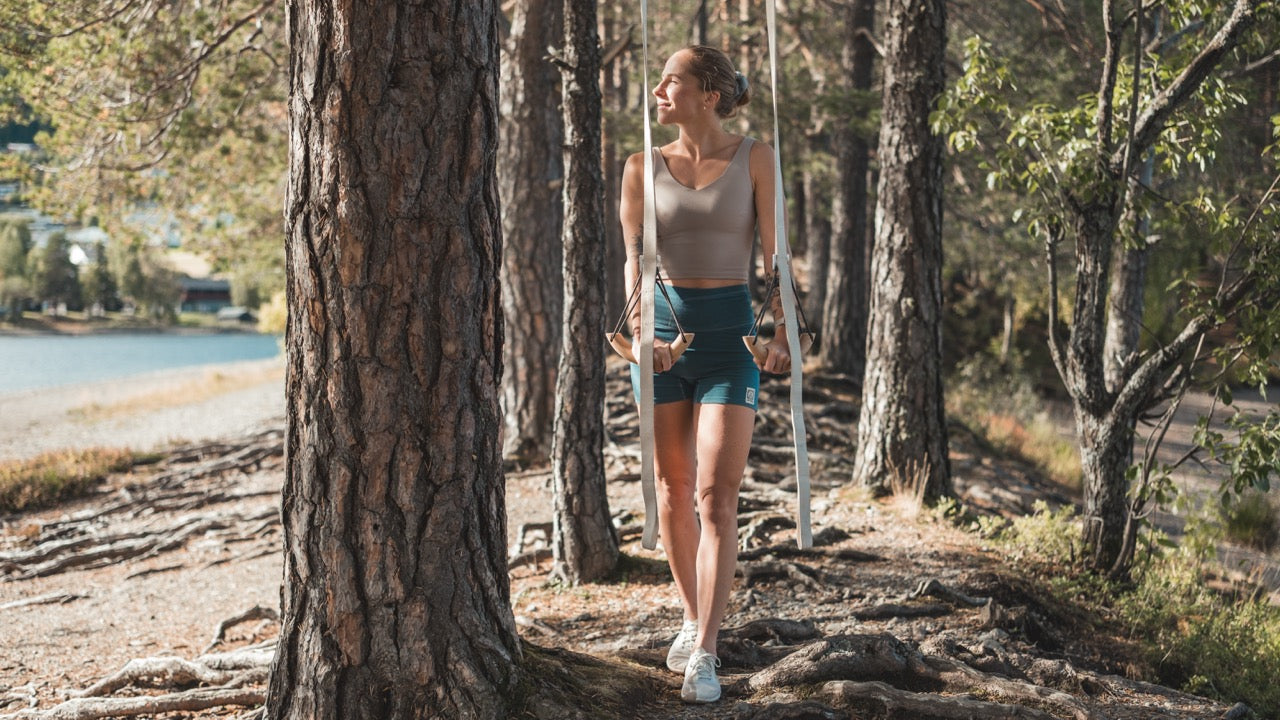

Moving to Reconnect
Movement was never meant to be separate from life. Moving to Reconnect is about rediscovering movement as something natural, varied, playful, and deeply human. And in the end finding our way back to our bodies, nature, and each other.

How to Strengthen Your Feet: Four Easy Exercises You Can Do at Home
There must be a reason why all our coaches wear barefoot shoes... One sign of weakness is consistently tired, achey, or tight foot muscles. Strengthening your feet will almost certainly help – far more than extra padding, which may feel soft but can weaken your feet over time by limiting mobility.
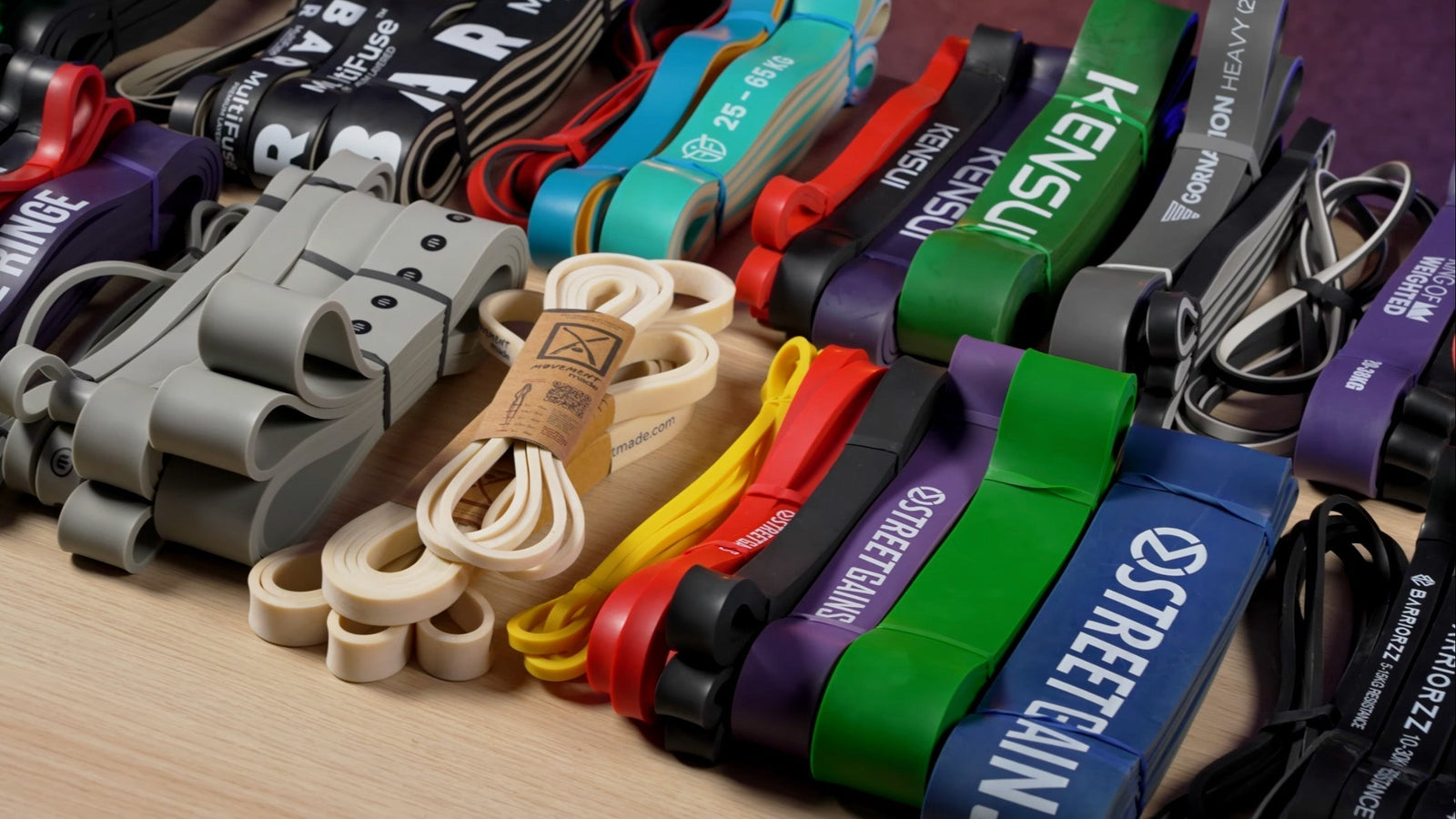

Movement Made Resistance Bands Featured in Calisthenics Worldwide Review
Our bands were recently featured in a review by Calisthenics Worldwide, and placed on top of the winning list - highlighted as one of the top performing options tested.